Zinc-Plated Steel Brackets
Zinc-plated steel brackets stamped and formed to your drawing — for indoor machinery, electrical enclosures, humid plant environments and general corrosion protection. Made in Q235 and SPCC from 0.5 mm to 10 mm, zinc plated to your specified coating thickness.
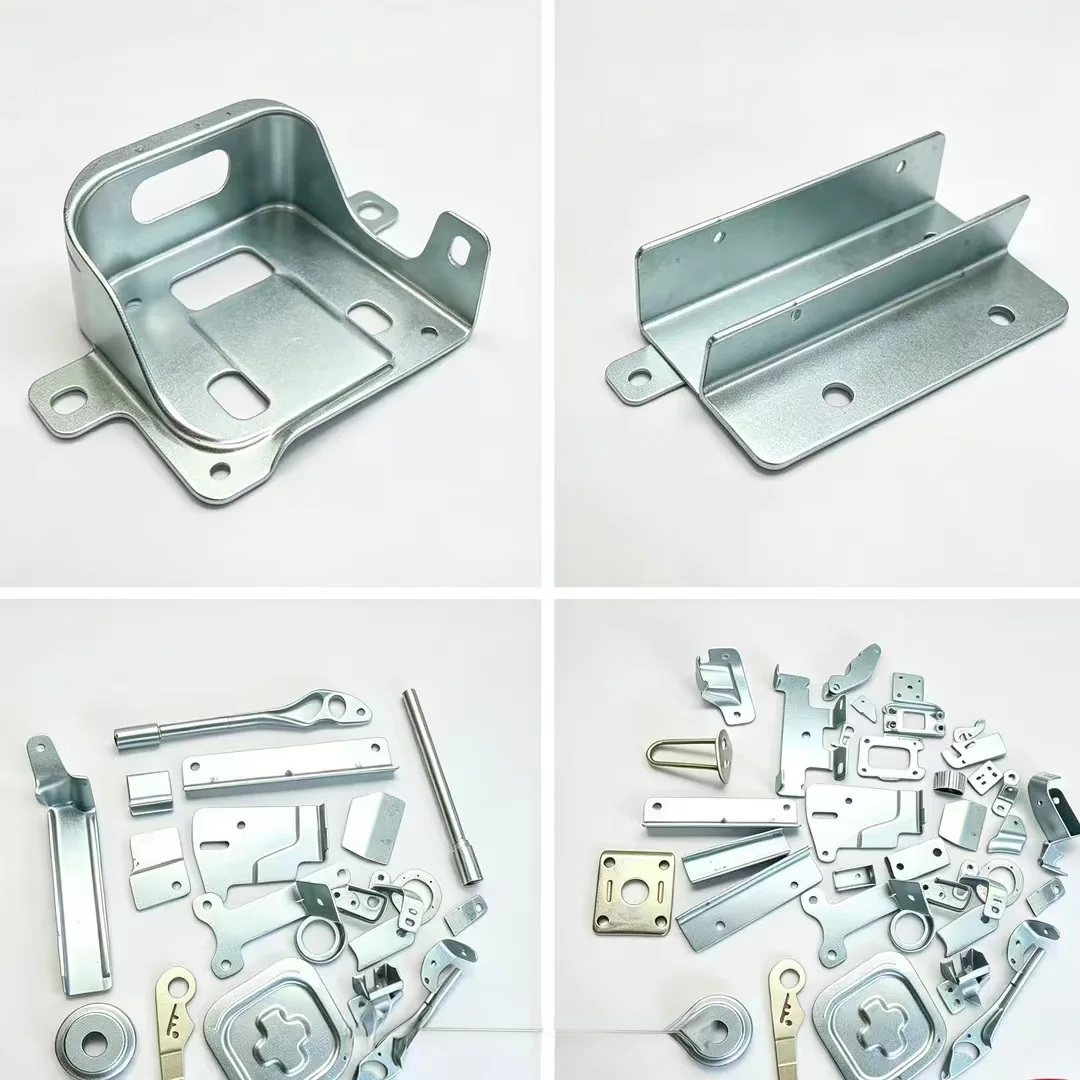
Zinc plating is the most common finish we apply and the one most often under-specified. “Zinc plated” on a drawing covers a range of coating thicknesses that behave very differently in service, and it says nothing about the two risks that catch people: hydrogen embrittlement and coating build-up in holes.
What zinc plating actually does
Zinc protects steel in two ways. It is a barrier — it keeps moisture off the surface — and it is sacrificial, meaning that where the coating is scratched, the zinc corrodes preferentially and protects the exposed steel nearby. That second property is why zinc plating tolerates handling damage better than paint.
How long it lasts is driven almost entirely by coating thickness, not by the label. A thin decorative zinc layer on an outdoor part will fail in months; a heavier coating on the same part can last years.
Specify the coating, not the word
A drawing that says “zinc plated” leaves the thickness to the plater. That is fine for a bracket in a dry workshop and not fine for a part in a humid plant. Put a number on it:
- Coating thickness in micrometres, stated on the drawing — this is the specification that matters.
- Applicable standard, if your quality system requires one, so the plater and your receiving inspection are measuring the same thing.
- Salt spray requirement, if the part sees moisture, stated as a standard test and duration. If you need a specific duration, say so at enquiry — we will confirm whether the coating route we use can reach it rather than assume.
- Appearance, if the part is visible. Zinc plating colour varies with the passivation applied, and “clear” versus “yellow” is a real difference in both look and corrosion performance.
We do not publish a blanket “salt spray hours” figure, because it depends on coating thickness, passivation and test conditions. Tell us the requirement and we will confirm what we can hold.
Hydrogen embrittlement: the risk on thick or hard parts
Electrolytic zinc plating generates hydrogen at the steel surface, and some of it enters the metal. On high-strength or heavily cold-worked steel, that hydrogen can cause delayed brittle failure — the part looks fine, then cracks days or weeks later under load.
The standard mitigation is a baking step after plating to drive the hydrogen out. Baking is an out-of-house operation for us, and it is not automatic.
When this matters:
- Material above roughly 1000 MPa tensile strength, or hardness above about 32 HRC
- Heavily cold-worked parts — tight bends, severe forming, drawn sections
- Thick sections where the plated surface is small relative to the core
- Any part that carries load in service rather than just locating something
If your part falls into any of these categories, say so at enquiry. We will flag it rather than ship plated parts that might fail in the field. For a simple Q235 bracket at 2 mm, this is not a concern; for a 6 mm high-strength formed part, it is.
Coating build-up and fit
Zinc plating adds thickness on every surface — typically a few micrometres per face depending on the specification. That matters at three places:
- Holes for close-fit fasteners. A plated hole is smaller than the punched hole. If a pin or a shoulder bolt fits closely, allow for the coating or mask the hole.
- Threads. Plating on a tapped hole changes the fit class. Standard practice allows for it; tight classes need agreement.
- Mating faces. Two plated faces that must sit flush will sit on coating thickness, not on steel.
None of this is a problem if it is anticipated. It becomes a problem when a bracket is designed to a bare-metal dimension and plated afterwards.
Zinc plating versus powder coating
They solve different problems, and combining them is harder than it looks — powder coating over zinc needs specific pretreatment for adhesion, and it is not a default combination.
| Zinc plating | Powder coating | |
|---|---|---|
| Corrosion mechanism | Barrier plus sacrificial protection | Barrier only |
| Behaviour when scratched | Zinc protects the exposed steel | Corrosion can creep under the film |
| Appearance | Metallic; colour varies by passivation | Any colour, matte to gloss |
| Build-up | Micrometres — minor | Tens of micrometres — significant for holes and threads |
| Best fit | Hidden parts, electrical bonding, general protection | Visible parts, colour matching, thicker film |
For internal or hidden brackets, zinc plating is usually the right answer and the cheaper one. For visible parts, powder coating. Details on all our finishing options: materials and surface finishing.
Specification summary
| Materials | Q235, SPCC, 304 stainless, copper, aluminium |
|---|---|
| Thickness | 0.5–10 mm, confirmed per drawing |
| Press range | 30–400 T |
| Finish | Zinc plating (thickness per drawing), powder coating, electrophoresis, deburring |
| Plating route | Electrolytic zinc; hot-dip galvanizing not offered |
| Post-plating baking | Out of house — flag at enquiry if required |
| Sampling | 7 days after requirements are confirmed |
| Production | 15–25 days after sample approval |
Frequently asked questions
What coating thickness should I specify?
It depends on the environment. A dry indoor bracket needs far less than a part in a humid plant or an occasional washdown. Give us the service condition and we will suggest a thickness, but put the final figure on the drawing so the plater and your inspection agree.
Can you do hot-dip galvanizing?
No. Our finishing is electrolytic zinc plating, powder coating, electrophoresis and deburring. Hot-dip galvanizing is a different process for heavier structural parts and we do not offer it.
Will plating affect my hole sizes?
Yes, slightly. Coating adds thickness on every surface, so a close-fit hole gets smaller. Allow for it at design, or tell us which holes must be masked.
Do you bake parts after plating?
Baking is out of house and not automatic. If your part is high-strength, heavily cold worked, or thick, raise it at enquiry — hydrogen embrittlement is a real failure mode and we would rather discuss it than ship and hope.
Can you zinc plate and then powder coat?
It is possible but needs specific pretreatment, and it is not a default combination. If you need both corrosion protection and colour, tell us at enquiry and we will advise on the practical route.
Request a quote
Send the drawing, material, thickness, plating specification and service environment to robert@hmstamping.com, or use the quote request form.
Related: steel brackets · materials and surface finishing · custom metal stamping parts · metal stamping
KEEP READING